Simla, India 1934
An Inheritance of Murder
An heir hunter team reaches out to you to ascertain if you are the long lost heir of an English Estate.
- Free UK shipping
- Hand-packed in Grimsby
- 14-day returns
The case
As they investigate, they send information to you about the last branch of the family line they have been contracted to explore before they can name you as sole heir.
The plot
It's the 1930s. Marie Jones, a young woman from a wealthy family in England has been sent to India to stay with her aunt in order to find a suitable match.
Part of what they call "the fishing fleet" – Marie is quickly swept up into the lavish lifestyles of the ex-pat community; gin and tonic on the terraces, tennis matches, high tea…
This transplantation of Hampshire to the Himalayas is not without problems, and within the year Marie is found to be missing.
Her lost journal is finally discovered under the floorboards of a local dwelling by an heir hunter. As the last known living relative of the family line, the journal falls into your possession.
With the help of regular discoveries from the Indian based heir hunter, it's up to you to fathom out what happened to Marie. Is her body lying somewhere in an Indian swamp waiting to be discovered? Why was she killed – what secrets did she discover?
How it plays
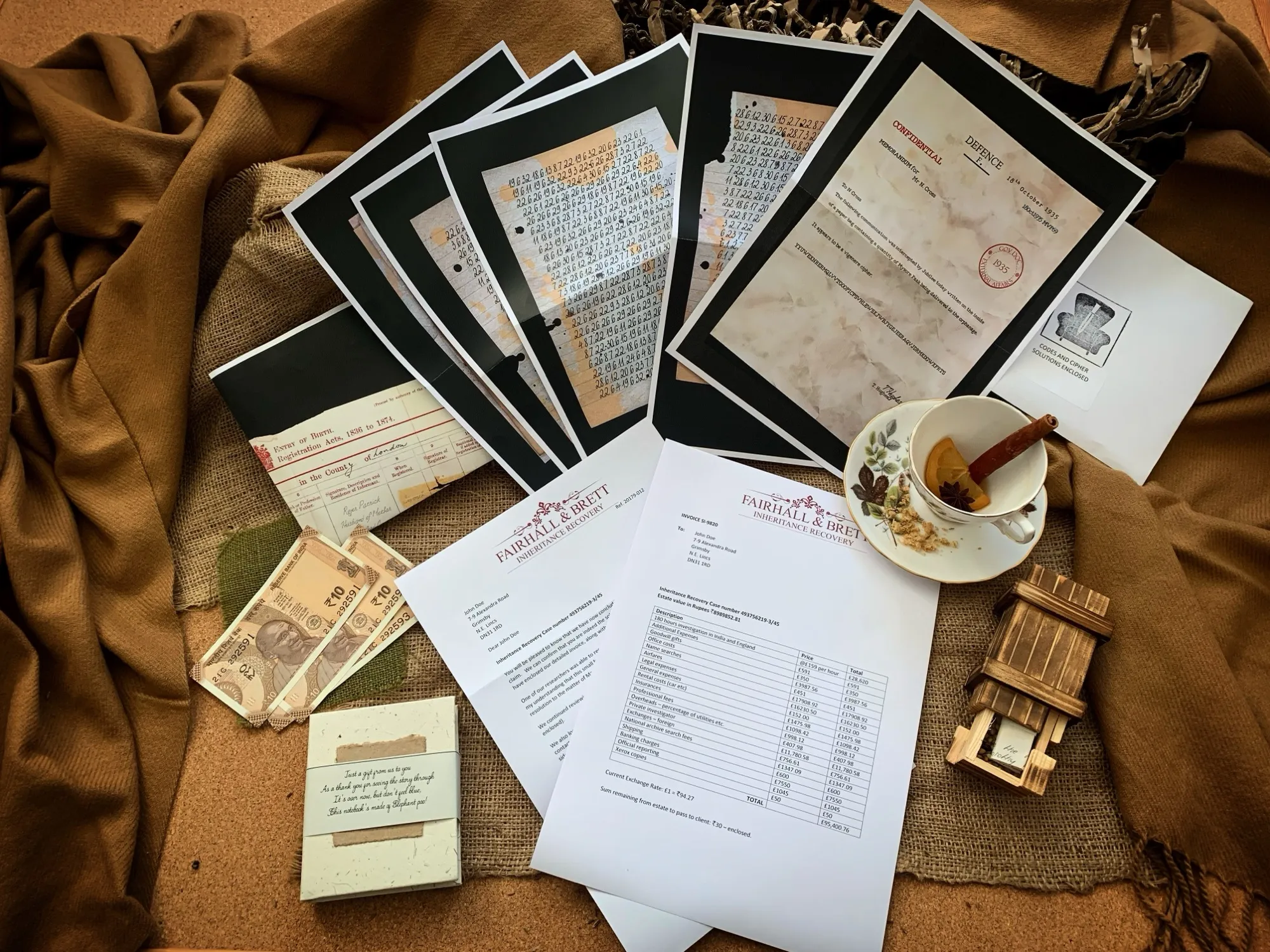
This is the first Cosykiller case, and remains a firm favourite both of the office team, and the players themselves. Originally designed as an episodic case that delivered monthly, the skyrocketing postage charges have dictated it now delivers in one go. Each episode is designed to last around an hour, with some taking longer than others shorter. The full case will take around 6-11 hours to complete. The sealed envelope at the bottom of the final box contains details on how to solve specific ciphers and the solution is written down and hidden in a wooden puzzle box to prevent accidental viewing. This is currently available in its original 12 episode format.
Designed for the curious
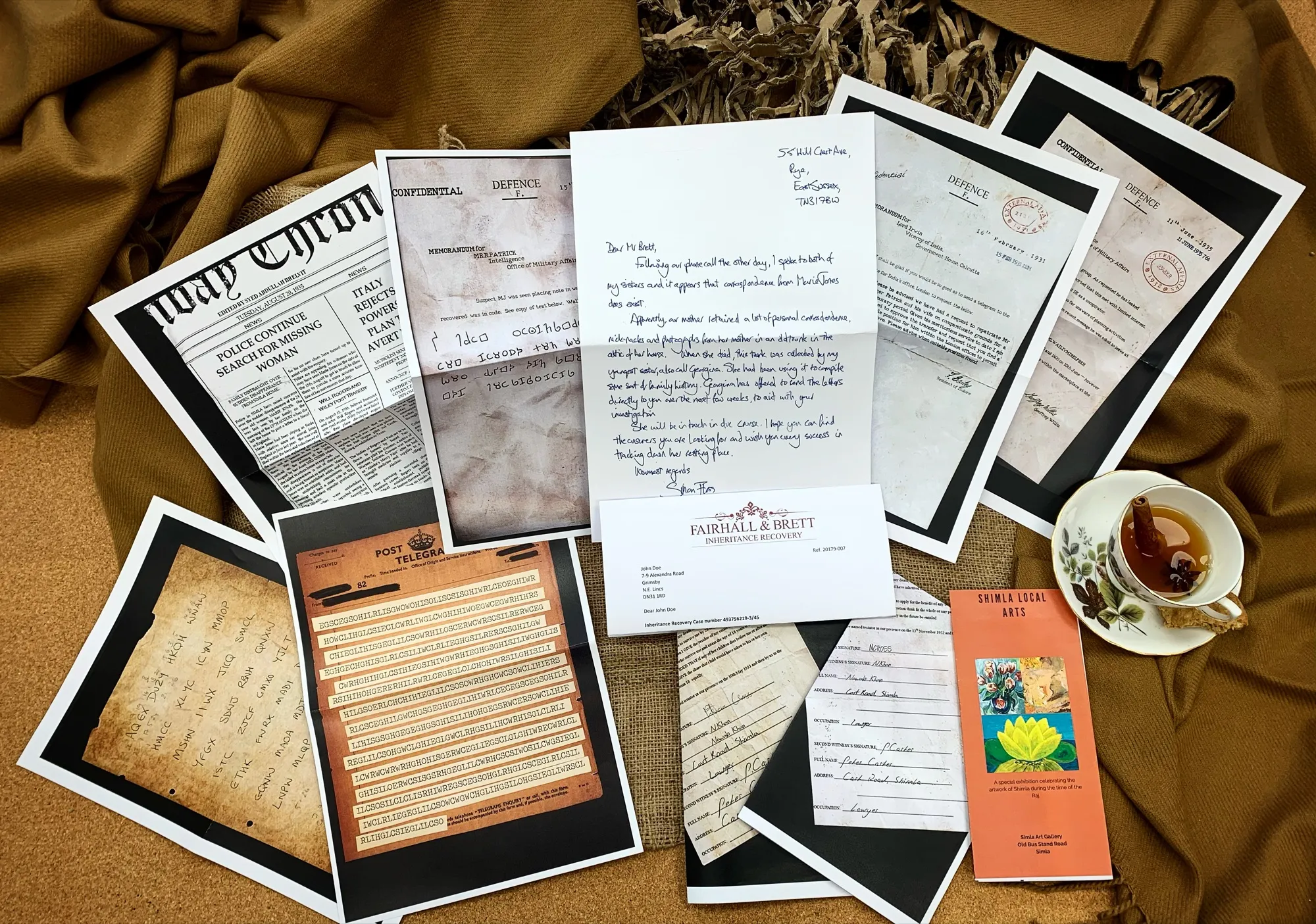
An Inheritance of Murder is the first longer form mystery by Cosykiller and many argue it's still the best in narrative immersive cases. Designed to be played over several sittings, this serial case begins with a burned diary and progresses through a series of handwritten letters collected by her friends which track her progress integrating in India and her contacts. Overlapping with the local insurgents working for independence and British intelligence teams hoping to thwart them, this story includes knock code, Caesar ciphers, Vigenère ciphers, letter exchange ciphers and a one time cipher. Support for all can be obtained via our support groups and online hints, as well as solutions contained in the final box. This is the perfect gift for someone who loves a challenge, finding out about a new period of history and is ready to take their narrative mystery solving to the next level.
The envelope contents
What's in the box
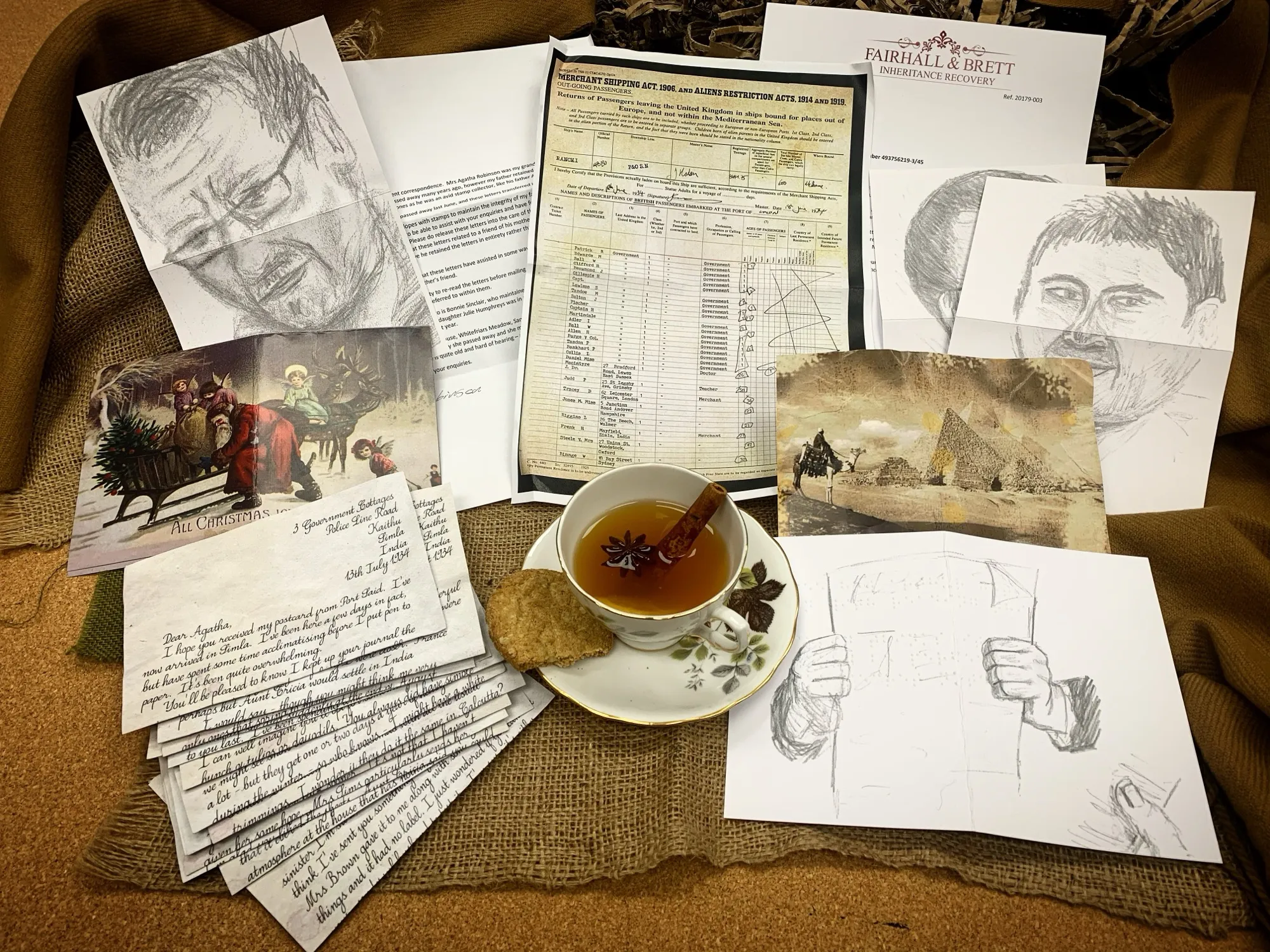
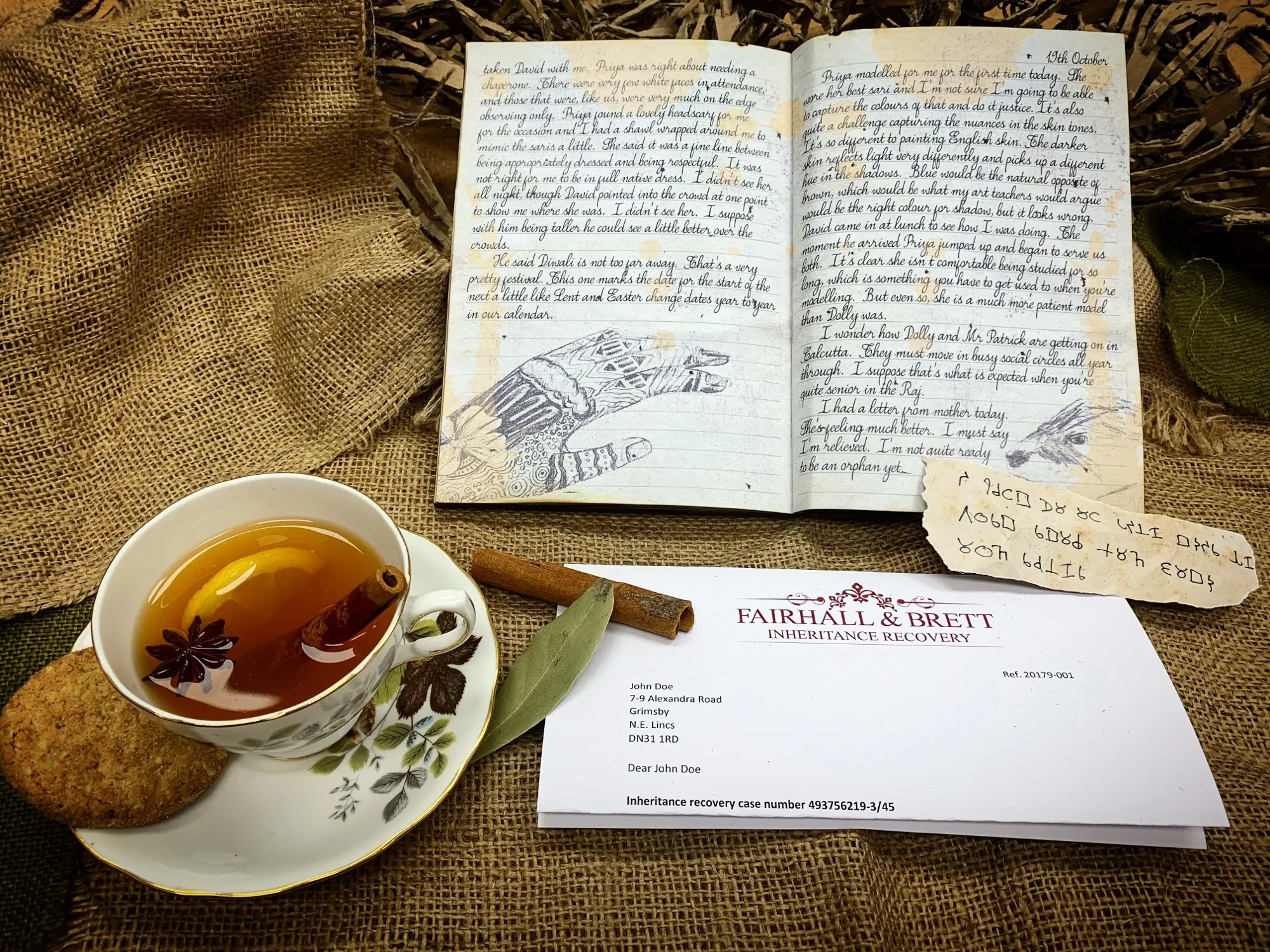
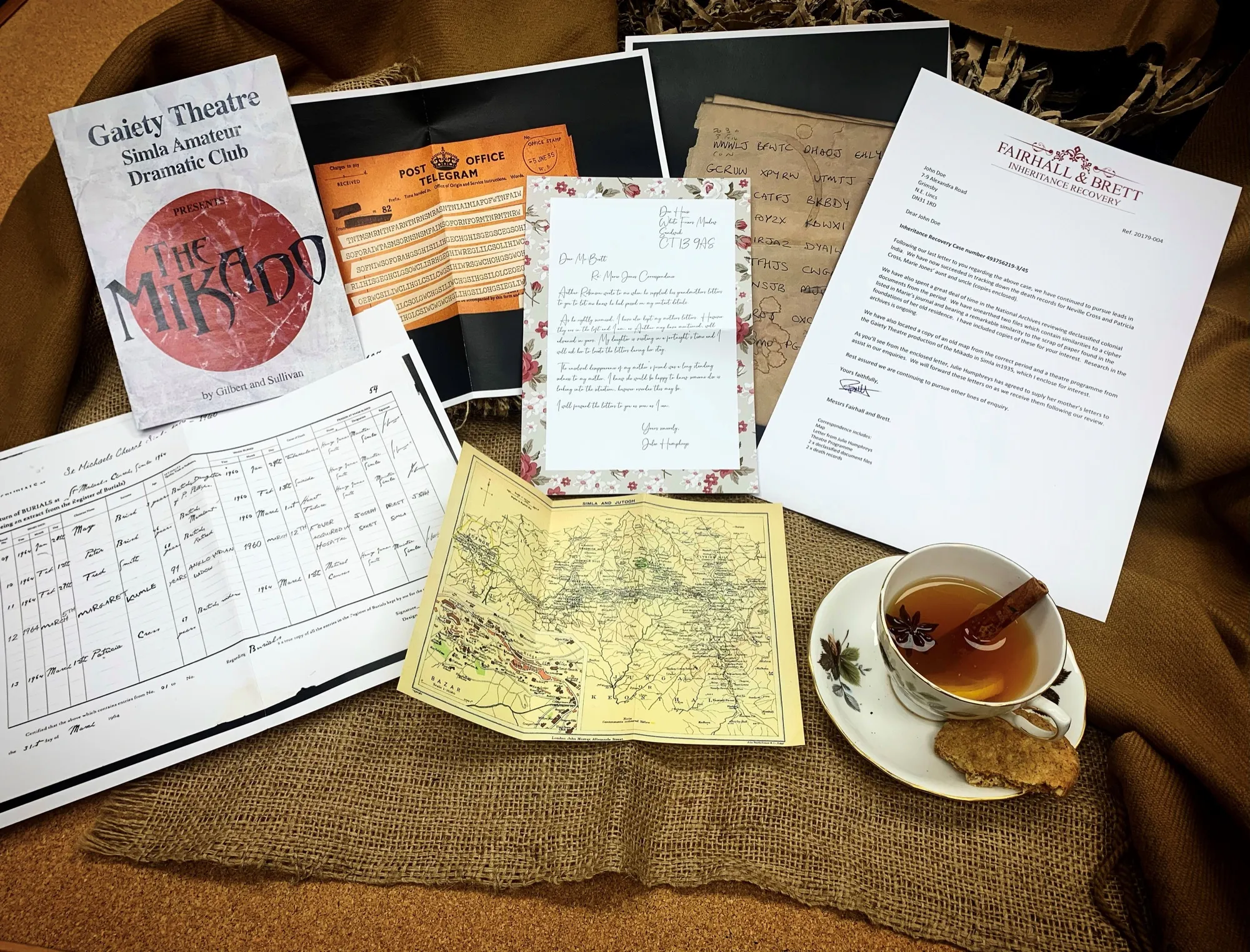
We always theme the contents to the story. This case is set in 1934, so over the course of the episodes you will discover a burned diary, bundles of handwritten letters, spices, gifts from India, replica military paperwork, postcards, photographs, sketches, newspaper cuttings, coins and art leaflets. It concludes with a small wooden puzzle box, your ACTUAL inheritance, and a small gift notebook.
-
A burned diary
-
Bundles of handwritten letters
-
Spices and gifts from India
-
Replica military paperwork
-
Postcards, photographs and sketches
-
Newspaper cuttings, coins and art leaflets
-
A small wooden puzzle box (your ACTUAL inheritance)
-
A small gift notebook
Ciphers & cross-references
What you'll be working with.
1934
Built for armchair sleuths new to cipher solving this case has some easy introductions like Braille, and Morse, but also includes some harder ciphers like, knock codes, Caesar ciphers and Vigenère as well as a devilish one time cipher and a cross referencing ciphers. Most codes are easily spotted but there are some sneaky ones in there too! If in doubt, speak to fellow sleuths in our detectives forum or check out our online hints.
Ciphers you'll meet
- Braille
- Morse
- Knock code
- Caesar
- Vigenère
- One time cipher
- Cross referencing ciphers
Letters of praise
What detectives are saying
“I received my first box in mid Dec and have only just sat down to start reading but so far I can get a sense of fantastic attention to detail from the turmeric pages, chai tea and the book cover to the faded bits. Can't wait to begin to make sense of it all!”
“I am working on An Inheritance of Murder right now. I'm a little over halfway through, and I love it! The story line is intriguing and draws you in deeper and deeper every month. The story is told through a journal, letters, and drawings. There are also many physical clues along the way. Putting it all together to come up with theories and answers is very challenging, and every connection made gives you a sense of satisfaction. I have tried a lot of the murder mystery box subscriptions available, and CosyKiller has made it to the top of my list!”
“I recently completed the "An Inheritance of Murder" mystery, and I am officially in awe of the folks at Cosy Killer! The story line was intriguing, and the materials in each box were elaborate and contributed to the aura of mystery. Most importantly, the puzzles, clues and ciphers were varied and complex. But don't worry — if you get stuck, there is a community of nice folks with whom you can brainstorm and from whom you can get hints!”
Before you buy
Common questions
I'm new to Cosykiller — where should I start?
Start with An Inheritance of Murder. It's our gentlest case, built for puzzle-minded beginners — Braille, letter-to-symbol substitutions and one-time cipher pads. The Secret of Site Q is the step up: a longer, cross-referencing investigation that's challenging but solvable. Shadows in the Gallery is our most advanced case, layering Playfair, knock code and Caesar ciphers across a post-war art theft — do it once you've worked one of the others.
How old do you need to be to play?
Cosykiller is written mainly for adults, but families can participate together. Every case is rated 14+ for themes of murder, and Shadows in the Gallery touches on wartime violence and post-war trauma, so we'd steer younger players towards An Inheritance of Murder first.
What's inside a Cosykiller box?
It varies by case, but every box contains a cover letter from Fairhall & Brett Inheritance Recovery — the fictional investigators who brief you on the case — followed by the documents like photographs, ciphers, maps, letters, military archives, telegrams, postcards, and other personal effects collected during the investigation. Some cases include dried botanicals, spices, theatre programmes and small physical objects. Each case is a complete story, with the final solution provided at the end. Nothing to download or sign into.
How long does it take to solve a case?
2-4 hours for our single box solves, and between 6-11 hours for some of our longer games. Length of time also depends on the number of players, and how much you like to re-read and how quick you are at spotting and solving ciphers. Most people spread a case over two or three evenings. You can pause whenever you like — put the lid back on, come back next weekend. Nothing expires.
Can I play solo, or do I need a group?
Both work well. Every case is designed to be solvable on your own — no mechanic depends on a second reader. That said, two to four players is where a case shines, because half the fun is arguing civilly about motive over a drink.
I'm stuck on a code — what do I do?
If you become totally stuck on a code, check out the <a href="https://fairhallandbrett.co.uk/" target="_blank" rel="noopener noreferrer">inheritance hunter's website</a> or join the online community where other detectives swap ideas (link included with your order). If you need one on one help then email <a href="mailto:supersleuth@cosykiller.com">supersleuth@cosykiller.com</a> with your case number and the document you're stuck on and we'll help without spoiling things for you.
Ready?
Mail me the case.
Other cases
More on the shelf
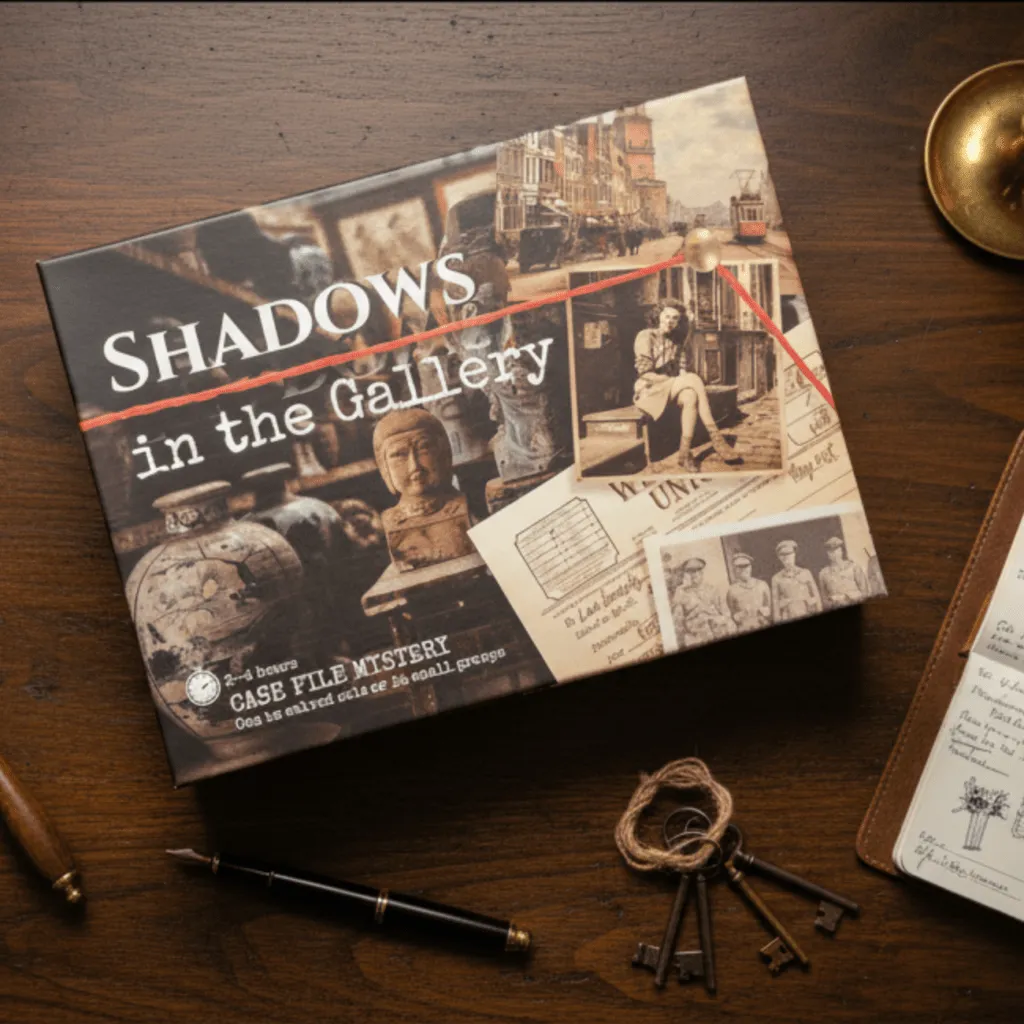
2-4 hours
Europe 1946
Shadows in the Gallery
A body discovered in a bricked up cellar unlocks the start of a cold case investigation.
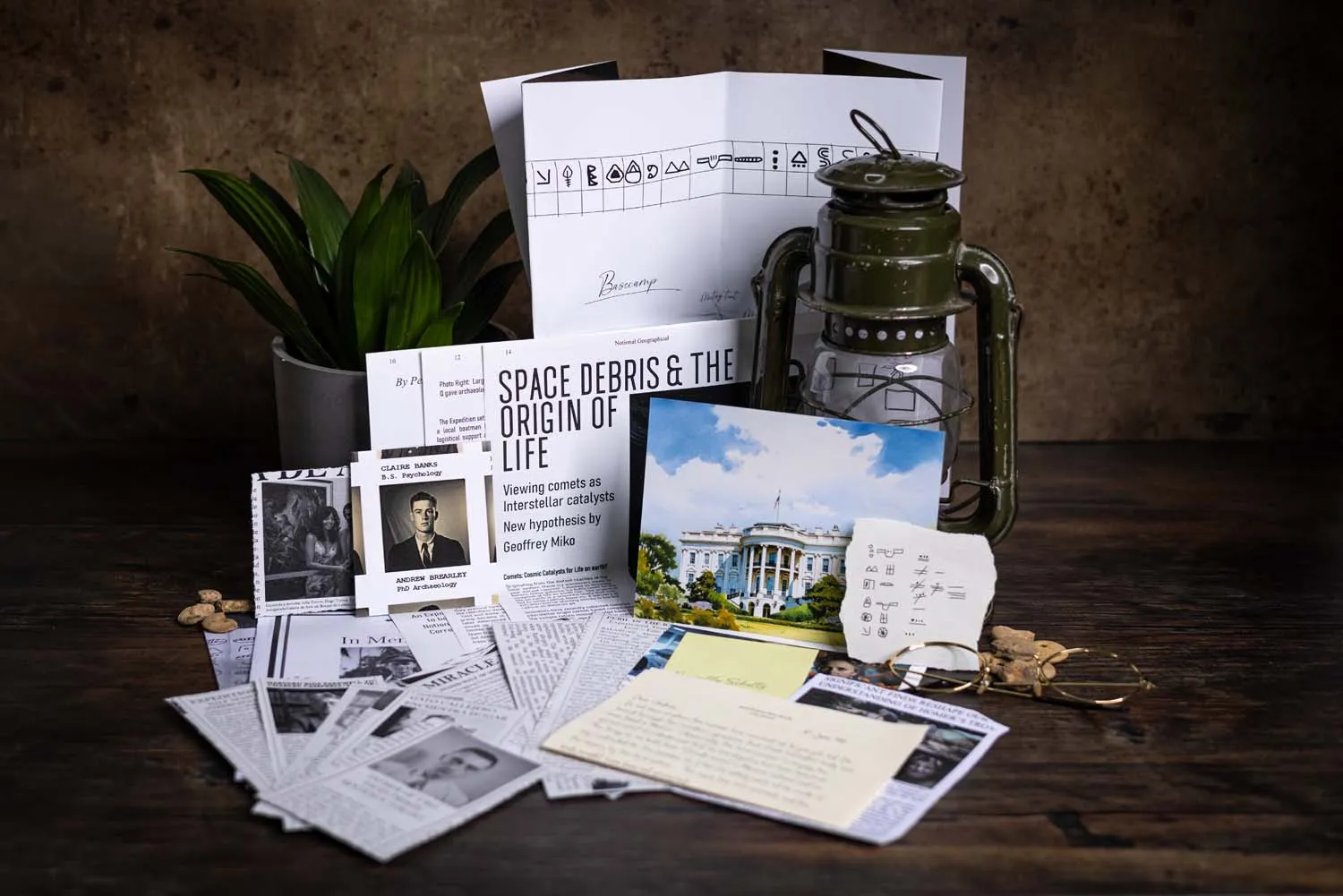
9-12 hours
Mexico and America 1950s-1980s
The Secret of Site Q
A body uncovered at an abandoned campsite in the dense Mexican rainforest reveals there was more to a simple tragedy.